NoboPay linked every bank account to one wallet. As product designer, I made a KYC-heavy product feel as quick as cash: registration rose 45% in testing. The business didn't scale, and this case shows why.
The problem
Bangladesh's banked families juggled several accounts, cards and a mobile wallet, with no single place to pay from.
The insight
Paying wasn't the hard part. Getting in was: in a survey of 20 people aged 22–45, sign-up, identity checks and PIN recovery were where people got stuck.
The answer
One wallet linked to every bank: scan to pay, prove a bank with a small deposit, and finish identity checks later. Registration rose 45% in testing.
Overview
Problem
Bangladesh had 82 million mobile wallet users, 18 million card holders and 2 million internet banking users. People with a bank account often had several, and none of them let you pay from all of them. Moving money into a bank was awkward, and paying a shop from one meant opening yet another app.
Solution
NoboPay linked a customer's bank accounts and cards to one wallet: scan to pay a shop, send money, recharge, and move money back to a bank. A bank is proven by a small deposit the customer types back, and identity checks can be finished later, with a reminder.
- Method
- Lean UX: hypothesise, design, test, learn
- Research
- Survey of 20 people · usability test with 20 customers
- Constraint
- Bangladesh Bank KYC rules: identity before payments
Product designer, from the first survey to handoff
I led NoboPay's design from the first survey to developer handoff. The product sat between business goals, engineering and Bangladesh Bank's identity rules, so aligning teams was as much of the job as drawing screens.
- Research and testing: focus groups, A/B and usability tests
- The visual identity and pattern library
- Every flow in the MVP, from sign-up to payments
- Alignment across product, engineering and compliance
Impact
Try the app
The shipped design, rebuilt at today's screen size and playing on its own. Tap the pulsing dot to take over, or pick another flow.
- Step 01 / 06
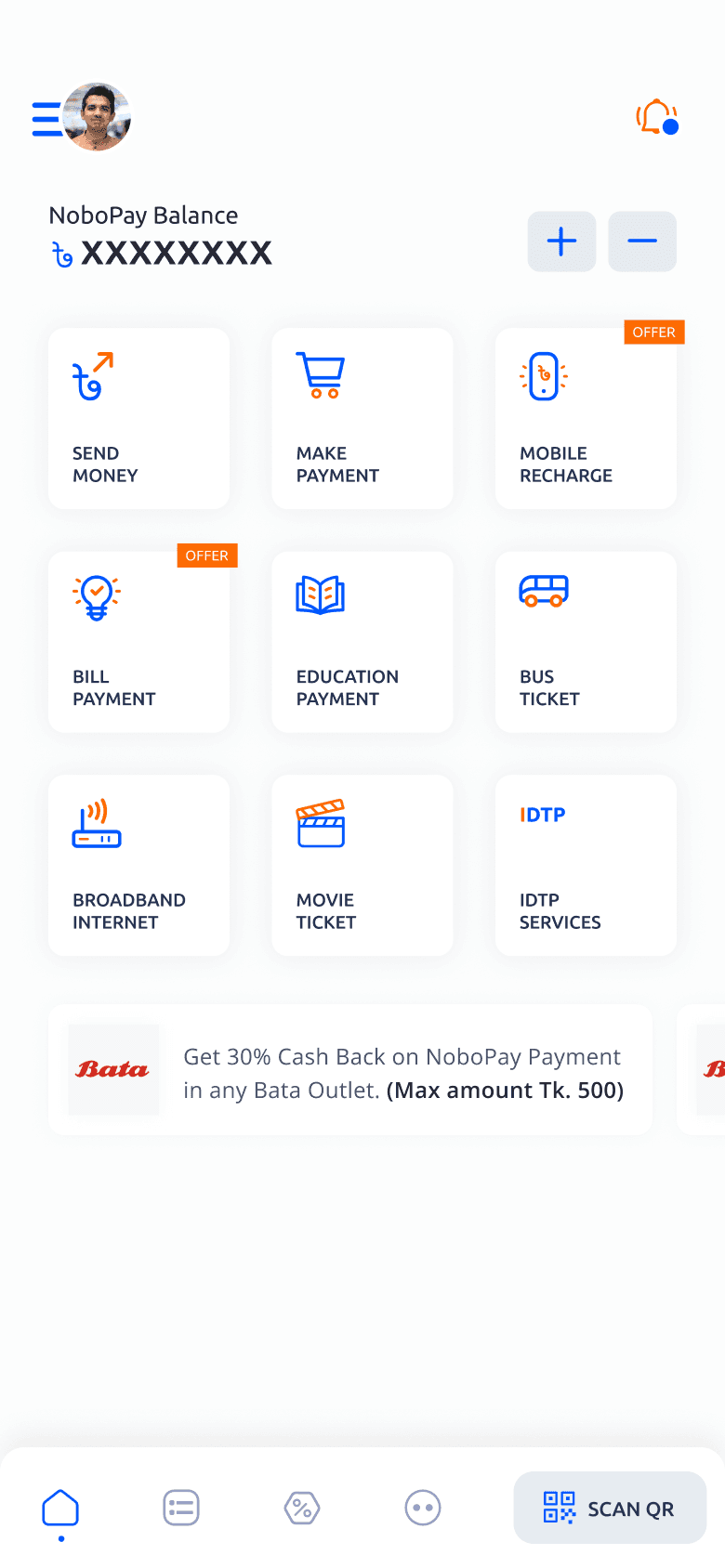
Nine services at most, the most used first and last in each row. Tap Make payment.
People had the money. Moving it was the problem.
A survey, a competitor teardown and the national payment data, before any screen.
Why NoboPay mattered
where people got stuck
Four problems the first MVP ran into

what we kept hearing
In their words
I have three bank accounts and still can't pay from one place.”
Every finance app wants everything from me before I can do anything.”
I forgot my PIN once and getting back in was a struggle.”
Most months I just want to pay my card bill and send money home.”
Paraphrased from survey answers, not verbatim quotes.
One wallet for every bank account
The research became three questions, a market case and an MVP the team could ship.
the questions we asked
From questions to goals
- How might we · 1
Let people pay from any bank account in one place?
One wallet for every account
Bank accounts and cards linked once, then used for every payment.
- How might we · 2
Keep identity checks without losing people at sign-up?
Sign up now, verify later
The account exists after a phone number and PIN; the checks follow at the user's pace.
- How might we · 3
Make everyday payments as quick as cash?
A few taps for daily payments
Nine services on Home, the most used first, and a PIN to confirm.
Why it was worth building
Brainstorm with the team
Four decisions, then a prototype in people's hands
Lean UX in short loops: guess, sketch, test, learn.
the calls we made
Four decisions, and what each one cost
Each one traded something away. These are the tradeoffs we chose.
- #1
Account first, identity checks later
Bangladesh Bank requires KYC, but asking for everything up front lost people halfway.
the tradeoff → The account can't move money until it's verified, so the reminder has to bring people back.
- #2
A small deposit proves the bank
Typing back an amount only the owner can see confirms the account is theirs, in the app.
the tradeoff → Not instant: the deposit has to land before the bank is linked.
- #3
Nine services, no more
Working memory holds about seven items, plus or minus two, so Home shows nine at most.
the tradeoff → Less-used services move behind More.
- #4
Services in the system tray
Pay, send or recharge from the Android quick settings, without opening the app.
the tradeoff → One more surface to design, build and keep in sync.
every flow, as shipped
A first week with NoboPay
Six flows from the shipped app, rebuilt at today's screen size, each playing on its own.


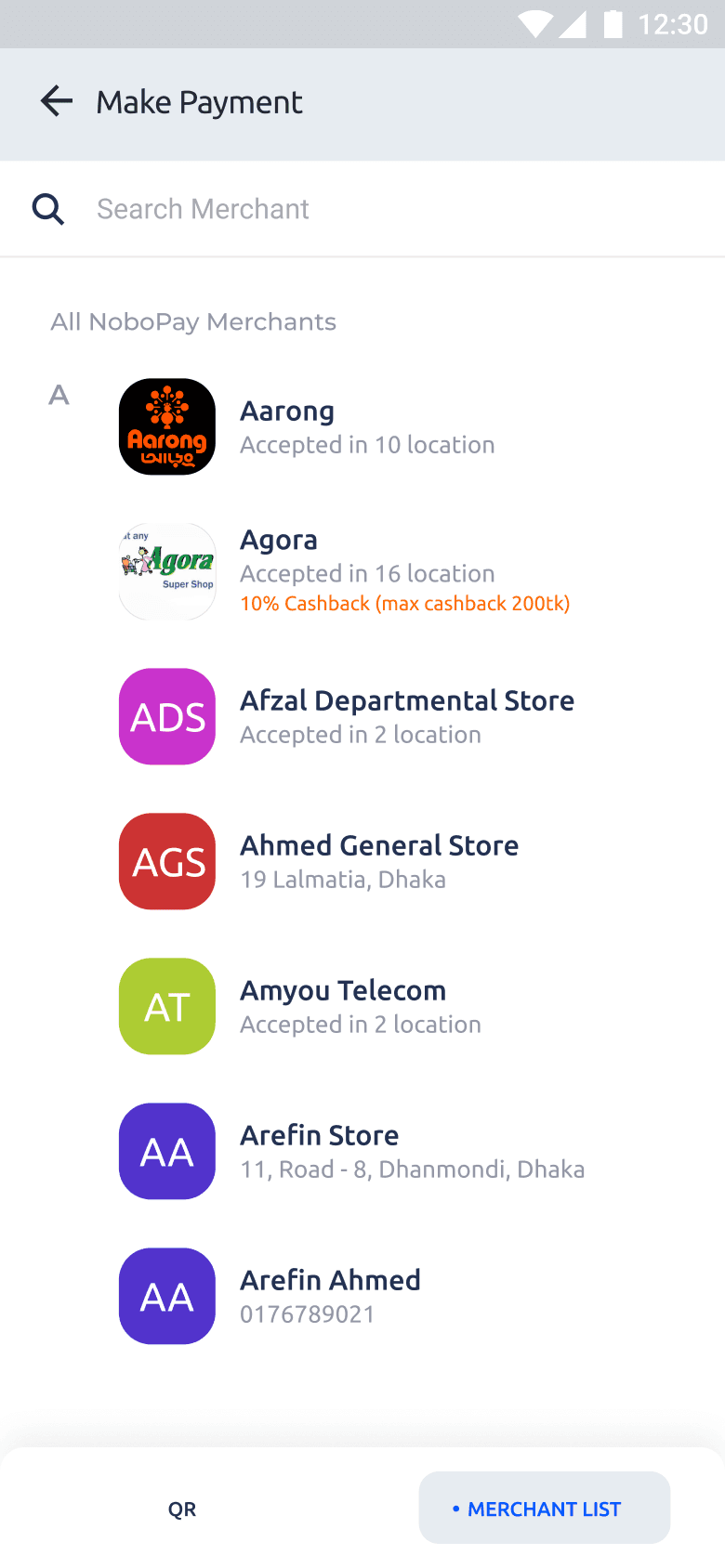
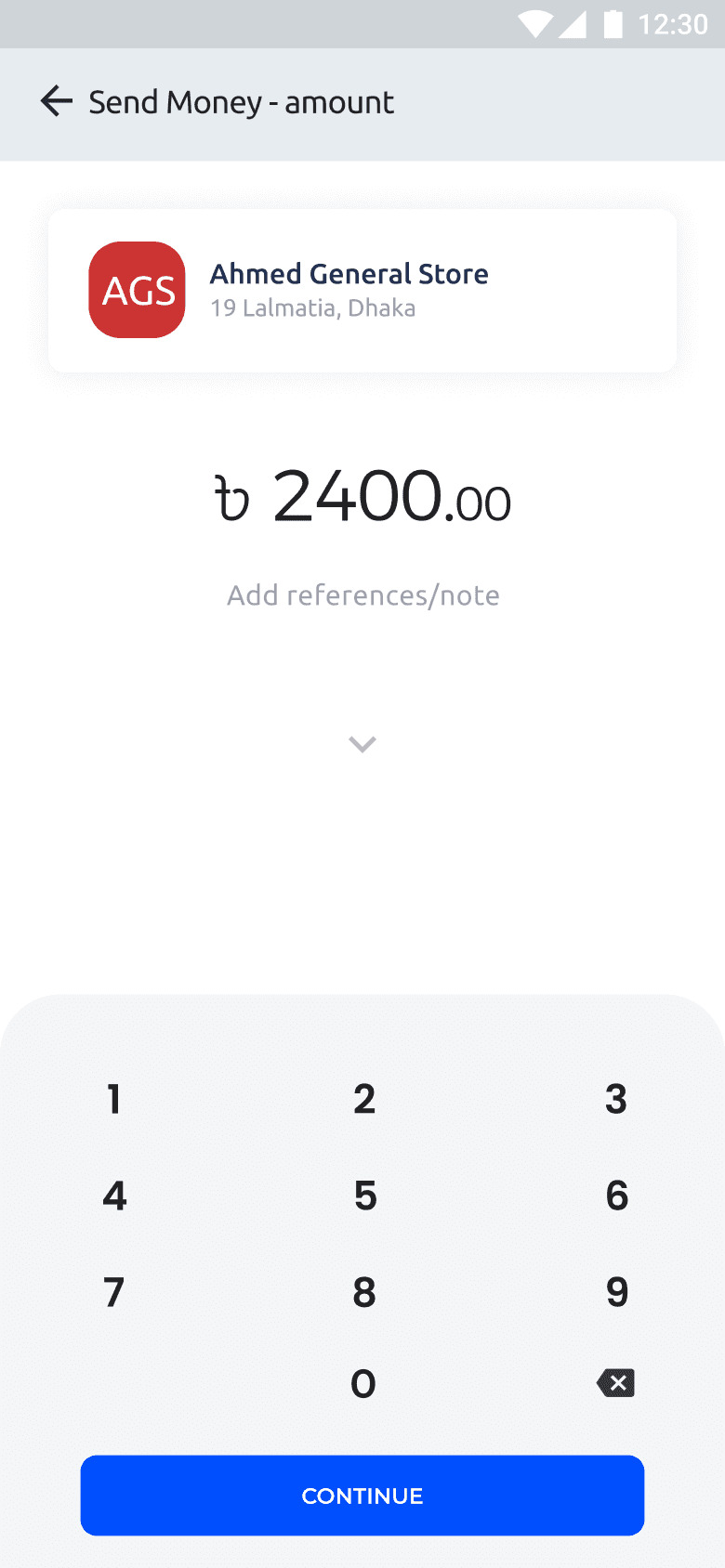
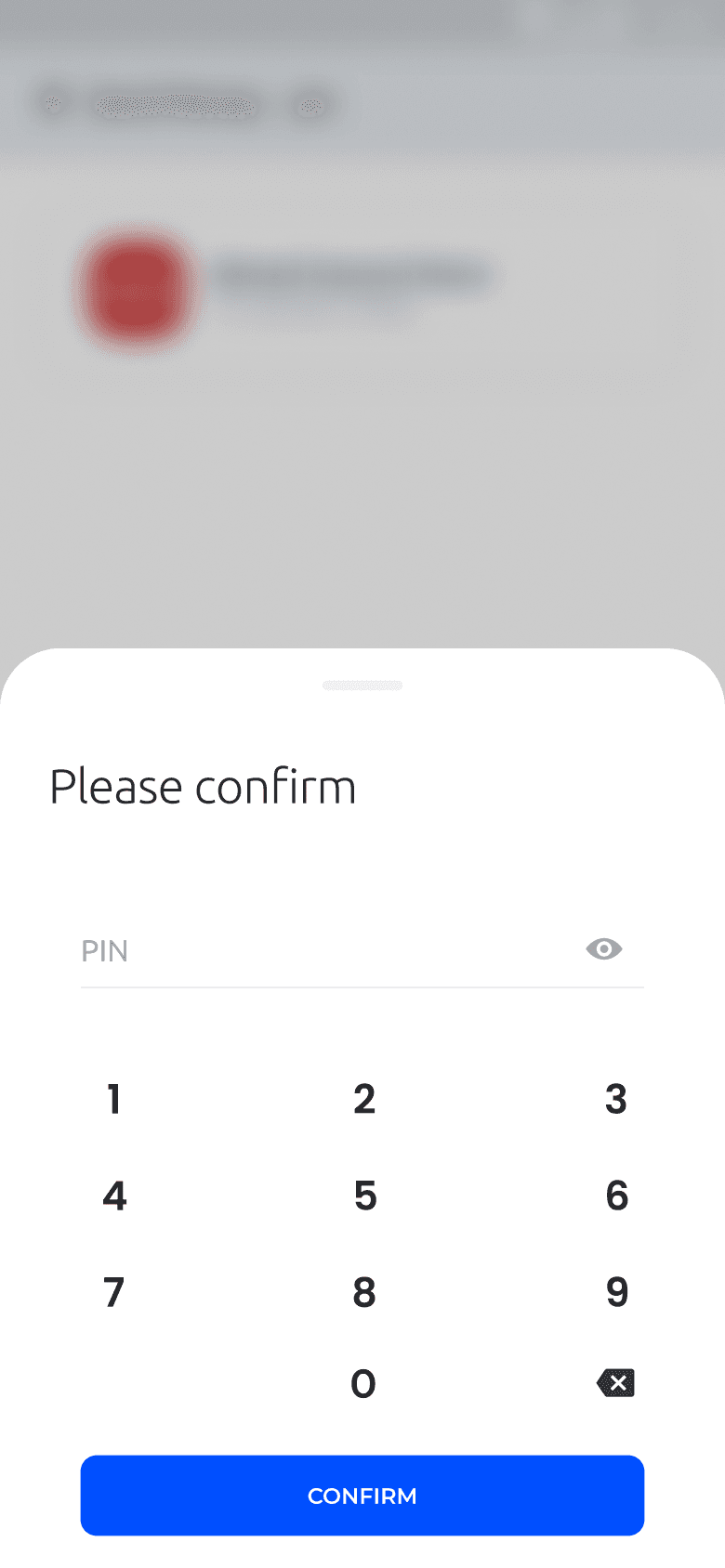


verify later
Sign up now, verify when it suits you
Bangladesh Bank requires identity checks before money moves. Asking for them up front lost people halfway, so the account is created after a phone number, PIN and code. NID and a selfie come next, with a reminder at a time the user picks.
why this matters: Registration was where people gave up. In testing, the new flow lifted customer registration by 45%.
the token
Prove the bank with a small deposit
Bank details go in once, with a photo of the cheque book. NoboPay sends a small amount to that account, and the customer types it back. Only the owner can see it, so that proves the account is theirs.
why this matters: Every add-money and transfer depended on a linked bank. Try it below; the amount is demo data.
nine services
A home that fits in your head
Working memory holds about seven items, plus or minus two, so Home shows nine services at most. The most used sit first and last in each row, where people remember them best. Hints and offer tags appear only where they help.
why this matters: Daily payments are habits. A short, stable menu lets people find a service without reading.
system tray
Pay without opening the app
The most used services also live in the Android quick settings, one swipe from any screen. Inside the app, the menu groups everything else, with a hint under each item.
why this matters: In testing with 20 customers, menu and navigation tasks improved to 75% after this change.
Usability test · 20 customers
An MVP in phases, Q1 to Q3 2021
Registration, bank linking, payments and transfers, shipped one phase at a time.
Blue and orange, built on platform rules
I built NoboPay's pattern library from competitor analysis, Apple's Human Interface Guidelines and Material Design. Bold blue and orange carried the brand's optimism, translucent response buttons kept the hierarchy clear, and every target met the 44px minimum.
Why NoboPay didn't scale
The design worked in testing. The business depended on its competitors.
2,000 users, 192 transactions a day
The MVP reached 2,000 users and 192 transactions a day, enough to drive updates and redesigns. But key features depended on third-party payment services, and when competitors saw NoboPay as a threat, they withdrew their support.
A small sample
High acquisition costs limited early access to 2,000 registered users.
Partners who were also rivals
Payment providers resisted a multi-payment platform, fearing they would lose customers and revenue.
No agent network
Without agents, NoboPay couldn't offer cash services or reach communities beyond the cities.
Design can lower the barrier. It can't remove the business risk.
What NoboPay taught me.
looking back
Test the business, not just the screens
The design held up in testing; the business model didn't. NoboPay depended on payment partners who were also competitors, and without an agent network it couldn't handle cash. Next time I'd put the riskiest business assumption in front of partners as early as the first prototype.
Jahangir
Three principles I carry
Principle 01: Design for the people left out
We worked closely with underserved users to find where digital payments failed them.
result → a simple, secure platform built around their needs
Principle 02: Make the complex feel simple
A clutter-free interface made bill payments and bank transfers manageable for people new to digital banking.
result → +45% registration in testing
Principle 03: Trust comes from transparency
Real-time updates, clear transaction histories and local language built confidence in a new brand.
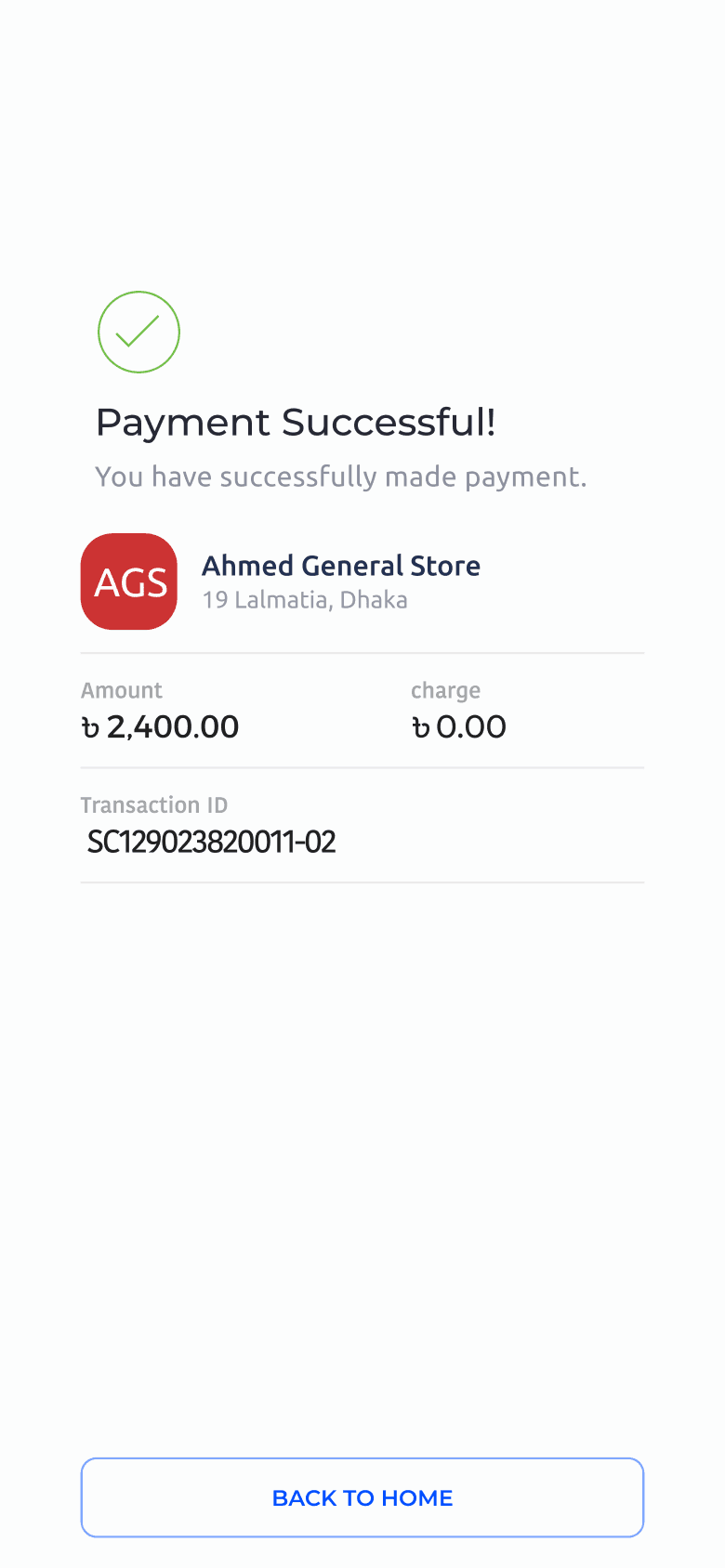
result → a receipt and a transaction ID on every payment
Have a similar problem? Let's talk.
If anything here sounds like the work you need shipped, get in touch. I reply within a day.
Start a conversation